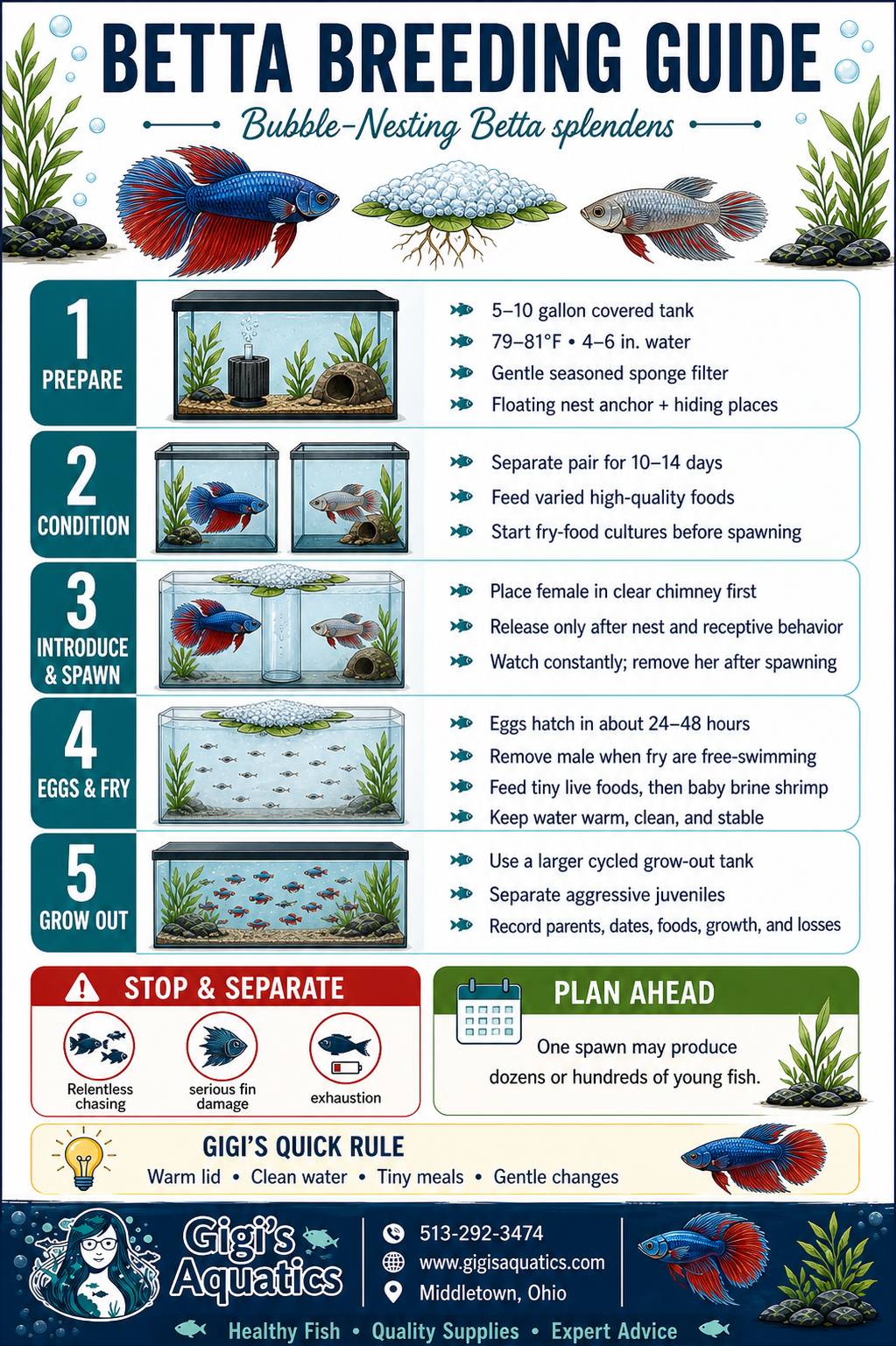
1. Prepare
Use a covered 5–10 gallon spawning aquarium at 79–81°F with 4–6 inches of water, a gentle seasoned sponge filter, a nest anchor, and hiding places.
Bubble-nesting Betta splendens require careful conditioning, constant supervision during introduction, tiny live fry foods, and room to safely grow and separate the young.
Breed only healthy fish. Have established filtration, recovery tanks, first foods, a grow-out aquarium, and a plan for potentially dozens or hundreds of juveniles.
Use a covered 5–10 gallon spawning aquarium at 79–81°F with 4–6 inches of water, a gentle seasoned sponge filter, a nest anchor, and hiding places.
Keep the pair separated for 10–14 days while feeding varied, high-quality foods. Start multiple fry-food cultures before spawning.
Place the female in a clear chimney first. Release her only after the pair shows readiness, watch constantly, and remove her when spawning ends.
Eggs commonly hatch in about 24–48 hours. Remove the male once fry are free-swimming and begin appropriately tiny live foods.
Use a larger cycled grow-out aquarium, maintain warm clean water, feed tiny meals, and separate juveniles when aggression begins.
Separate the adults immediately for relentless chasing, serious fin damage, exhaustion, or an inability to retreat and rest.
Save or share this quick-reference guide before setting up a breeding pair.